
In the course of my work, I occasionally unearth the odd surprise; Like discovering that an employed member of staff had been skimming money; or that an associate had been quietly running a private client book “on the side” using the practice’s brand, equipment, and goodwill.
Thankfully incidents that require getting the police involved are few and far between. Podiatry Practice Health checks typically produce much more predictable findings – and by extension – issues that are easier and quicker to fix in order to achieve a much better level of profitability from the business.
Most podiatry practice owners are clinically excellent and commercially exhausted. They’re booked out, patients love them, the diary is full — and yet the profit left over at the end of the year doesn’t reflect any of that. It’s rarely one big mistake. It’s a handful of quiet, unexamined habits that have been sitting in the business for years, each one small, all of them compounding. Here are the eight I see most often when I look under the bonnet of an independent UK podiatry practice.

Consumables, sterilisation, insurance, rent, and staff wages have all risen steadily over the past few years. Fee lists rarely rise at the same rate, because putting prices up feels uncomfortable, especially with long-standing patients – and especially with everyone harking on about the cost-of-living crisis. The result is a fee structure that was profitable when it was set and has been quietly losing ground ever since. Rebuild your pricing from the actual cost of delivering each appointment type — not last year’s number plus a nominal increase — and do it annually, not “whenever it feels overdue.”

Routine care, biomechanical assessments, nail surgery, diabetic foot checks, orthotics — most practices know their total revenue but very few can tell you the true margin on each service once chair time, consumables, and clinician costs are properly allocated. Without that breakdown, you can end up filling your diary with the appointment types that feel productive but are quietly the least profitable, while the genuinely high-margin work gets squeezed to the edges of the week.
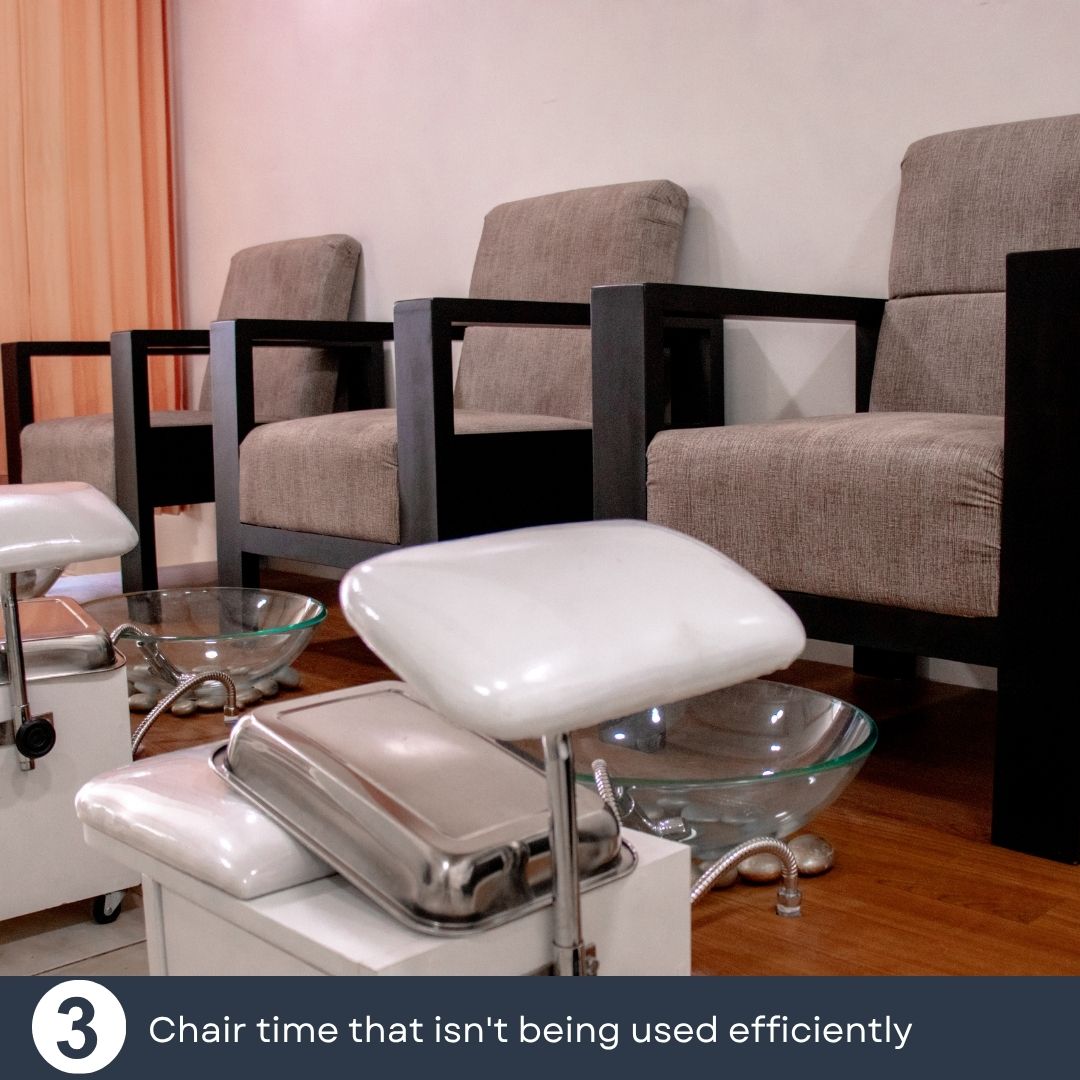
In a clinic, time is the product. A diary with gaps between appointments, overlong slots built in “just in case,” or a mix of appointment lengths that doesn’t match actual clinical need all erode capacity you’re already paying for in rent and clinician time. Reviewing your appointment-length template against real treatment-time data, and tightening your booking rules, is one of the fastest ways to optimise chair-time and improve profit per clinic.

This isn’t about pushing product on patients — that erodes trust fast in a clinical setting. But there’s a real gap between a clinician mentioning orthotics or a maintenance plan in passing and one confidently explaining, in plain terms, why ongoing care matters for that specific patient. Many practices leave meaningful revenue on the table simply because clinicians aren’t trained or supported to have that conversation well. Clear, patient-led options — presented as good clinical advice rather than a sales pitch — routinely lift revenue per patient without damaging the relationship.

This is one of the most common — and most overlooked — profit leaks in podiatry, and it’s rarely reviewed once it’s set. Many practice owners inherited their split structure from what “everyone does” or from whatever felt fair when they first brought an associate on board, and then never revisited it as the business absorbed more of the real cost: the room, the equipment, the reception and booking support, the marketing that fills the associate’s diary, the compliance and insurance overhead, the brand that brings patients through the door in the first place. When you cost all of that properly, a split that looked generous-but-reasonable on paper often turns out to leave the business with a wafer-thin margin on every appointment an associate delivers — while the associate walks away with the lion’s share of the fee for turning up and doing the clinical work. That’s not automatically wrong, but it should be a deliberate decision, not a legacy one. Model your true cost-to-serve per associate appointment, compare it honestly against what the split actually pays them, and you may find you’re effectively subsidising your associates’ income out of your own margin. Choosing the best way to address this will depend upon the supply of clinical human resource in your area – and may require utilisation of Foot Health Care Practitioners, rather than HCPC registered Podiatrists for some of the more basic, routine ‘bread and butter’ work they can deliver at a cheaper underlying level of remuneration.

Orthotic labs, dressings, sterilisation supplies, footwear stock if you sell it — these relationships tend to be set up once and left alone. Suppliers rely on that inertia. A proper benchmarking exercise against at least two alternative suppliers, done annually, typically uncovers savings that go straight to the bottom line, particularly on orthotic lab costs, which are often the single biggest controllable expense in a podiatry business.

Practices often staff for their busiest days and carry that cost across the whole week, or keep a clinician on a fixed schedule that no longer matches patient demand by day or season. An honest, analytical look at utilisation — real booked chair-hours against available chair-hours, by clinician, by day — usually reveals where the cost is disproportionate to the income it’s generating, and where a more flexible staffing model would protect margin without affecting patient access.

This one doesn’t feel like a profit issue, but it is. Practices with no future exit or succession plan tend to stay informal — undocumented systems, a clinician-dependent patient list, financials that are “good enough” rather than clean and sale-ready. All of that suppresses both current profitability and the eventual value of the business. Owners who start building toward a future sale or handover, even years in advance, tend to formalise systems, delegate more, and tighten reporting — and profitability tends to follow, almost as a by-product of finally running the practice as a business rather than an extension of the clinician.
Where to start
You don’t need to fix all eight at once. Read the list back and notice which one made you wince — that’s usually the right place to begin. Fee structure, chair-time efficiency, and associate splits tend to be the quickest wins: all three can be reviewed and adjusted in weeks, and all three put money back into the practice almost immediately, which builds the momentum you need before tackling the bigger structural issues like staffing models or succession planning.
If you’re not sure where your practice is actually leaking profit, that’s precisely what a proper business review exists to answer — a clear, numbers-based look at your practice against sector benchmarks, rather than a gut feeling about what might be wrong.
What You Don’t Check Is What Costs You Most
None of this shows up on a standard set of accounts. That’s exactly why so much of it goes unnoticed for years — and why practice owners who never look tend to keep paying the price quietly, year after year. A proper practice review typically costs a fraction of what it uncovers; in our experience, the fee pays for itself many times over, often returning ten times its cost or more in recovered margin, corrected splits, and stopped leaks. The question isn’t really whether you can afford a review. It’s whether you can afford not to know.
Give us a call on 0161 929 8389 or email [email protected] for a confidential practice review — and find out what your numbers aren’t telling you.